How to Train Supervisors on Daily Reporting Best Practices
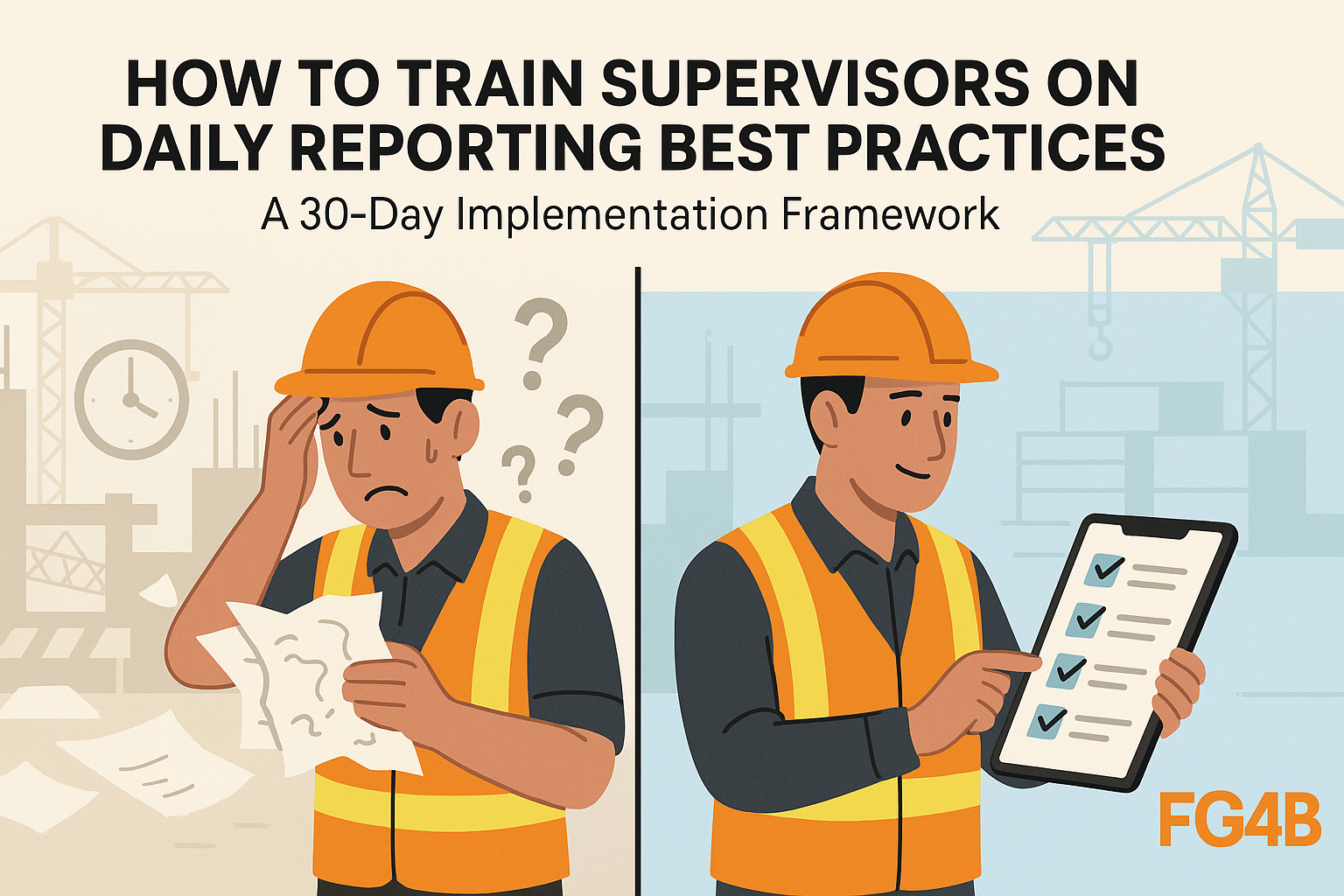
How to Train Supervisors on Daily Reporting Best Practices: A 30-Day Implementation Framework
Every contractor knows the frustration: incomplete daily reports, missing documentation when clients dispute charges, and supervisors who view reporting as paperwork instead of project protection. When field supervisors don’t consistently document what happens on job sites, you lose billable hours, struggle to defend change orders, and can’t identify productivity problems until they’ve cost thousands. The gap between what happens in the field and what gets documented creates liability exposure and profit leakage that quietly drains your bottom line.
The key to train supervisors daily reporting isn’t just handing them a template and hoping for compliance. It requires a structured onboarding process that shows them why documentation matters, gives them efficient systems they’ll actually use, and creates accountability loops that sustain the habit long-term. When done right, supervisor training transforms daily reports from dreaded busywork into your most valuable project management tool.
This guide provides a complete framework to train supervisors daily reporting, whether you’re onboarding new field leaders or improving habits with experienced foremen. You’ll get a 30-day implementation timeline, role-playing training scripts, downloadable daily report templates for construction projects, and proven techniques for overcoming resistance from supervisors who’ve never documented their work consistently. By following this system, you’ll build a culture where accurate field supervisor reporting happens every day without constant reminders.
Why Supervisor Daily Reporting Training Matters for Your Bottom Line
Poor daily reporting isn’t just annoying—it’s bleeding your profits. When you train supervisors daily reporting properly, you’re protecting revenue most contractors don’t even realize they’re losing. When you train supervisors daily reporting with a focus on change orders, you protect revenue most contractors lose.
The hidden cost of poor documentation hits hardest in change order revenue. Without solid construction daily logs backing up your claims, you’ll walk away from $12,000-$45,000 per project that you legitimately earned. Even worse, try defending disputed time-and-materials charges when your field supervisor reporting consists of coffee-stained scraps of paper.
Inconsistent job site documentation cripples operations in ways that compound daily. Your project managers are flying blind, making decisions with yesterday’s information while crew productivity issues drain budgets unnoticed until it’s too late to correct course.
Reliable construction documentation standards become your competitive weapon. Photo-backed daily work logs resolve disputes in hours instead of weeks. Analyzing actual versus estimated hours gives you data-driven scheduling that competitors can’t match.
The mindset shift matters most. When supervisors understand that site supervisor responsibilities around reporting protect their reputation and paycheck—not just satisfy the office—they document defensively, catch expensive problems early, and own project outcomes.
What You’ll Need Before Training Supervisors on Daily Reporting
Successful supervisor training best practices start with having the right tools ready before your first session.
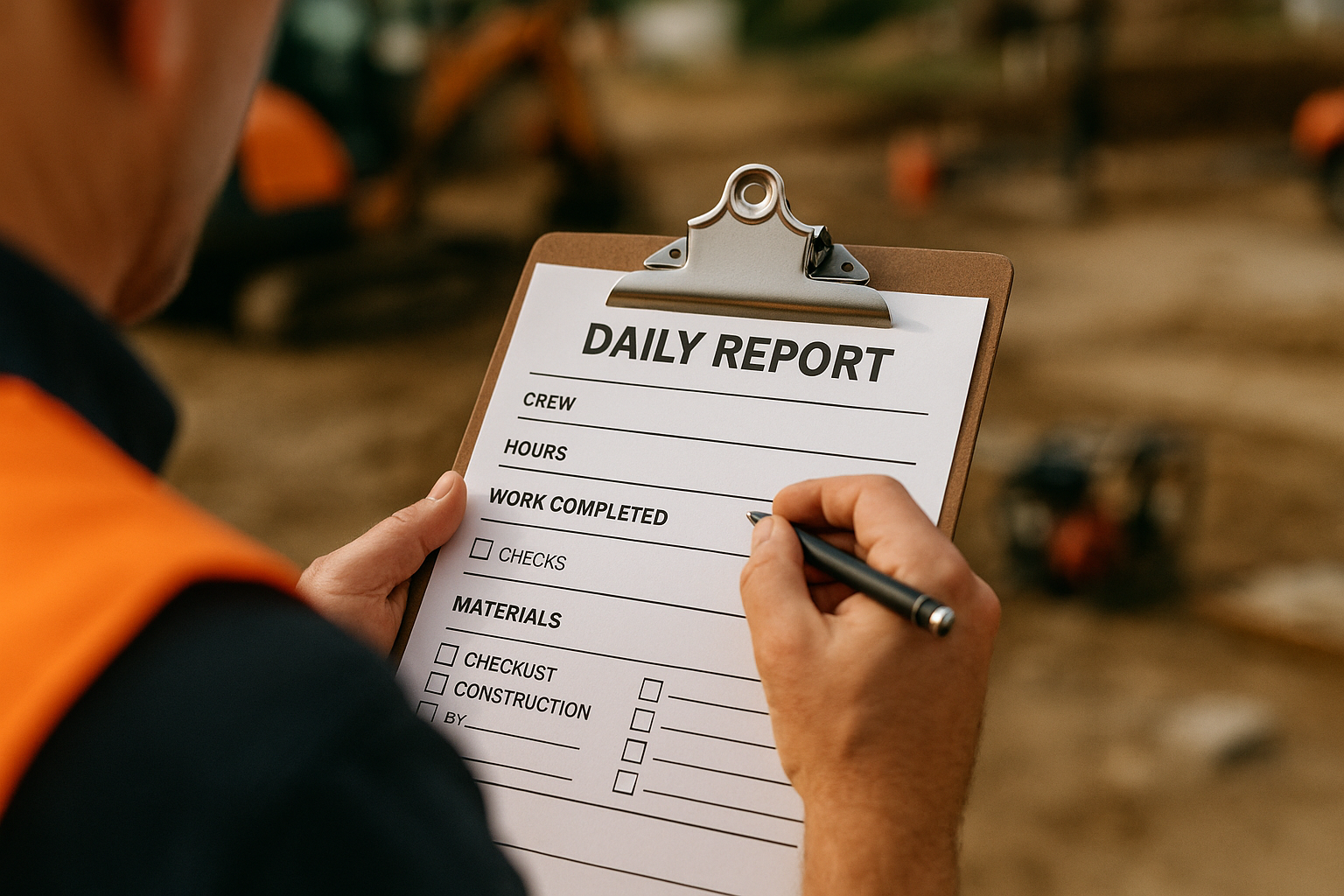
Daily report templates construction teams need should take 10 minutes max to complete. Your standardized forms must cover weather conditions, crew attendance, work completed, materials used, equipment hours, safety incidents, and visitor logs—all in mobile-friendly formats field supervisors can access on-site.
Supervisor accountability systems require infrastructure decisions upfront. Choose field reporting software or photo-based apps for digital tracking, establish review schedules showing exactly who checks reports when, and create clear consequences for non-compliance.
Allocate training time strategically: plan a 2-hour initial session, four 15-minute weekly check-ins during month one, plus 30 minutes weekly for office review and responses.
Gather real examples from past projects—both excellent daily work logs and poor reports that caused problems. Job site documentation becomes meaningful when supervisors see actual consequences from their trade.
Finally, secure buy-in from project managers who’ll review submissions. They must respond within 24 hours, or supervisors will abandon the system entirely.
How to Train Supervisors Daily Reporting: The 30-Day Implementation Timeline
A structured timeline transforms supervisor training best practices from overwhelming to achievable. Breaking the process into four distinct weeks helps your field supervisors build habits without disrupting their primary job site responsibilities.
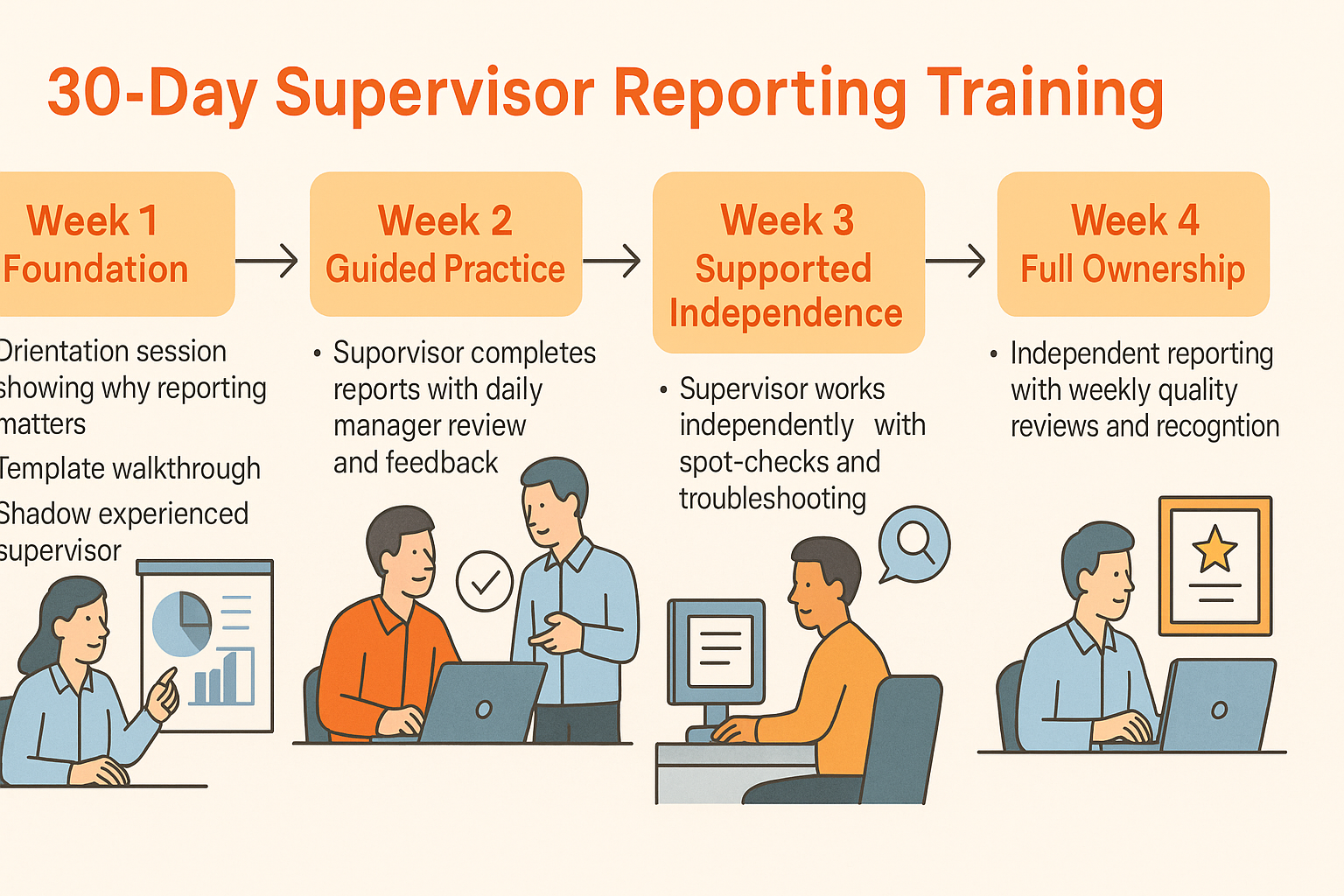
Week 1 establishes the foundation with a focused 2-hour training session. Explain how construction daily logs protect supervisors legally and financially—when a client disputes hours worked, that daily report becomes their best defense. Walk through each template section using real scenarios from your projects, demonstrate your mobile app or paper submission process, and complete a practice report together using yesterday’s actual work. When you train supervisors daily reporting with clear examples from day one, they understand the purpose behind each field.
Week 2 prioritizes daily submission with intensive feedback loops. When you train supervisors daily reporting with intensive feedback loops, submission becomes habitual within days. Supervisors submit reports every single day while office staff reviews within two hours and calls with specific guidance. Focus entirely on completion compliance rather than perfection—you’re building the habit first.
Week 3 shifts toward quality improvement now that reports arrive consistently. Provide feedback on content quality and detail level. Introduce a role-playing exercise where supervisors practice documenting a change order conversation.
Week 4 transitions to autonomy with reduced feedback frequency. Conduct a 15-minute one-on-one reviewing their complete month of daily work logs, identify their strongest documentation areas and one improvement focus, then shift to your permanent review schedule.
Beyond 30 days requires system maintenance through monthly meetings where supervisors see how their documentation helped win disputes or supported invoices, quarterly refresher training, and recognition programs celebrating exemplary crew productivity tracking.
Train Supervisors Daily Reporting Through Role-Playing Scenarios
Role-playing transforms supervisor training best practices from abstract concepts into muscle memory your team can use under pressure. These exercises show you exactly how to train supervisors daily reporting skills they’ll use under pressure.
Documenting verbal change orders requires quick thinking when a client says “while you’re here, can you also…” Have your trainer play the client requesting additional work, and coach the supervisor to immediately note the time, exact request, everyone present, and their response about needing written approval. The supervisor then writes a daily log entry that creates a defensible paper trail: “10:15 AM - Owner Jane Smith requested adding drainage line to north side. Explained T&M rates and need for written authorization before proceeding.”
Weather delay documentation goes beyond writing “rained today.” Walk supervisors through photographing conditions, screenshotting their weather app with timestamp, specifying which tasks stopped (concrete pour delayed) versus continued (interior framing), and noting crew reassignments so your time and materials tracking matches the narrative perfectly.
Safety incident reporting demands immediate action. Practice the 15-minute rule: document first, investigate later. Role-play interviewing the crew member using open-ended questions, demonstrate photographing the scene from multiple angles, and show how the daily report entry must align word-for-word with the separate incident report—inconsistencies kill credibility.
Run 2-3 scenarios during initial training, then introduce new ones monthly as refreshers. Better yet, have experienced foremen train newer supervisors using these scripts customized to your trade’s specific situations.
Overcoming Resistance from Experienced Supervisors
Veteran foremen are often your biggest implementation challenge when introducing construction daily logs, but their resistance usually signals process problems you need to fix anyway.
Understanding their resistance starts with recognizing that experienced supervisors have built successful careers without detailed job site documentation. They often interpret new reporting requirements as management questioning their competence after years of proven results. Many are also uncomfortable with field reporting software if they’ve relied on paper systems, and they’re right when they say current processes leave no time for additional paperwork.
The respect-first conversation changes everything. Ask your top foreman what information he wishes he’d documented when that change order dispute cost you $8,000 last year. Frame daily report templates construction as protecting his reputation—when the client questions his crew’s hours, detailed daily work logs prove exactly what happened. When you train supervisors daily reporting as a tool that protects them personally, resistance drops significantly.
Make reporting easier than their current method. If your supervisor already texts you photos, show him how adding three sentences creates a complete report while eliminating the paper timesheets he currently drives to the office.
Peer accountability works better than mandates. Have your best supervisor champion the system and demonstrate supervisor training best practices to others. When crews see how solid documentation helped win a time and materials dispute, adoption accelerates naturally.
Set clear expectations: daily reporting is now a site supervisor responsibility like safety compliance, non-negotiable after a 60-day transition period.
Building a Feedback Loop That Keeps Supervisors Engaged
The most common reason supervisors abandon daily reporting? They feel like their documentation vanishes into a black hole with zero acknowledgment from the office team.
The 24-hour response rule is your most powerful tool to train supervisors daily reporting habits. Assign one specific person—your project manager, project coordinator, or office manager—to review each supervisor’s daily report and acknowledge it within 24 hours. They must ask at least one clarifying question, even on perfect reports. This simple interaction proves someone actually reads what supervisors submit.
During daily report reviews, look for completeness in required sections, specificity matching your estimate line items for accurate job costing, documentation of potential disputes, and crew productivity tracking data that seems unusual. When a supervisor writes “worked on framing,” that’s useless. “Completed second-floor exterior wall framing, south elevation” connects to your budget and protects you later.
Give feedback that improves quality by highlighting specific excellent entries rather than criticizing gaps. Ask “What material did the supplier short you?” instead of “Your materials section is incomplete.” Share real wins: “Your photo of that wall condition saved us $2,400 when the client questioned our change order.” When you train supervisors daily reporting with positive reinforcement, quality improves faster than with criticism.
Track weekly metrics including submission compliance percentage, time between shift-end and submission, completeness scores, and usefulness ratings when reports support change orders. Monthly review meetings should show supervisors how their aggregated data reveals productivity patterns and supports invoicing.
Make construction daily logs valuable to supervisors themselves by generating weekly summaries for their time management and providing copies for their personal records—documentation that protects them legally if incidents occur.
Common Daily Reporting Training Mistakes and How to Avoid Them
Even well-designed training programs fail when common implementation mistakes undermine supervisor buy-in and follow-through.
Overly complex daily report templates are the fastest way to kill compliance. Your supervisors won’t complete three-page forms after 10-hour days on site. Streamline to a single page covering only information you’ll actually use. If you’re requesting data you never reference, eliminate those fields. Test the completion time yourself—if it takes more than 10 minutes, simplify further.
Training on forms instead of purpose creates robotic compliance without judgment. Spending your entire session explaining how to fill boxes doesn’t help supervisors understand what details matter. Start with real stories about how proper construction daily logs saved money or prevented disputes. When you train supervisors daily reporting by focusing on purpose first, they’ll make better decisions about what to record.
Lack of accountability destroys even the best supervisor training best practices. When some skip reports without consequences, compliant supervisors resent the extra work and stop submitting. Establish during training that daily work logs are mandatory like safety meetings, then implement progressive discipline.
Problematic field reporting software gets abandoned quickly when it crashes, requires strong cell signal, or has confusing interfaces. Paper systems work fine with efficient collection processes. Only go digital if the tool is genuinely easier and you’ve tested it thoroughly with your foreman training group first.
Measuring Success: Supervisor Accountability Systems That Work
Without clear metrics, even the best supervisor training best practices fade within weeks. Here’s how to build accountability into your field reporting software systems.
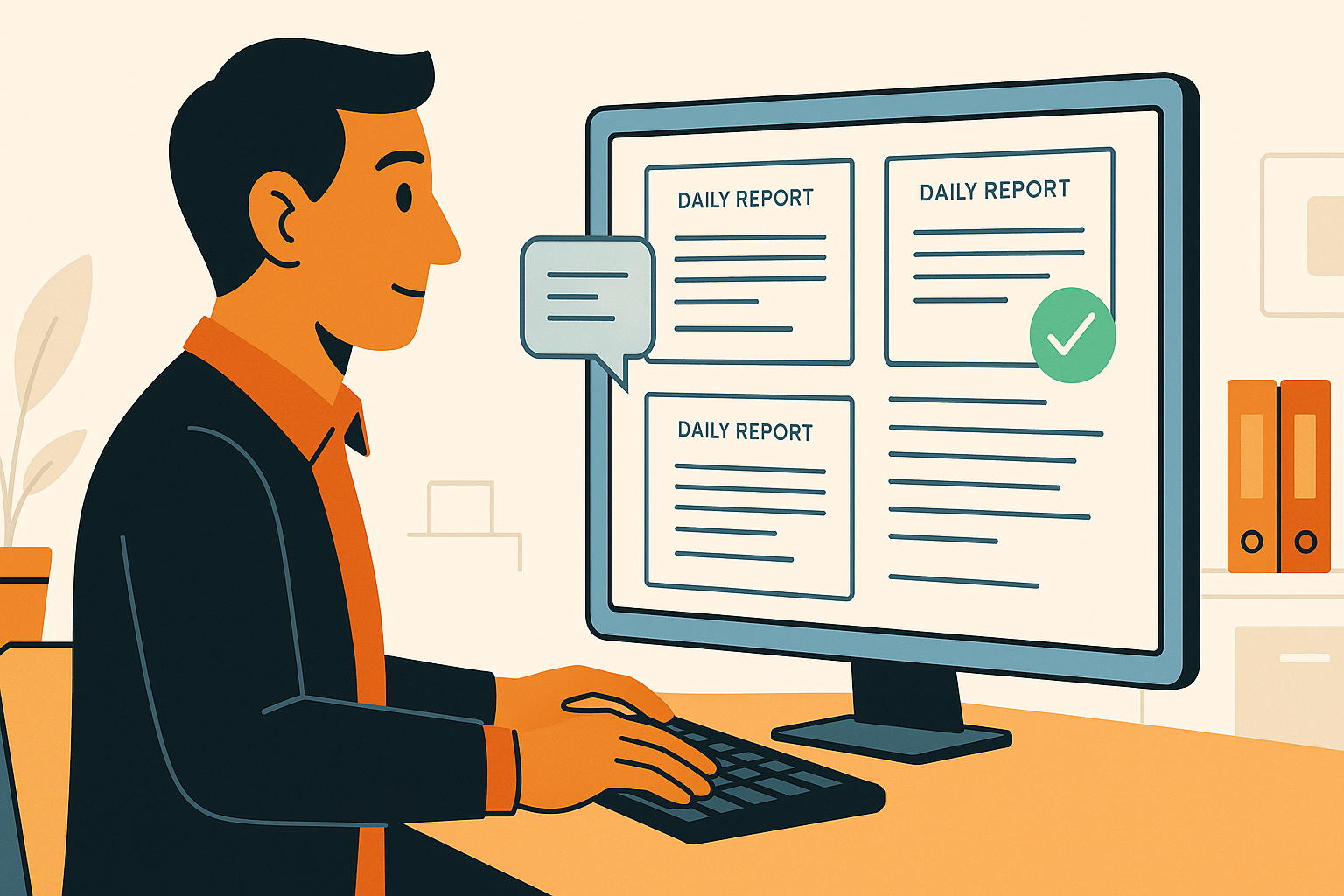
Track compliance metrics monthly by monitoring submission rates, timing, and trends for each supervisor. Calculate what percentage of workdays have completed construction daily logs, measure average hours between shift end and report submission, and watch for declining patterns. If your foreman submitted reports within two hours daily in Month One but now averages six hours, you’ve spotted trouble early.
Quality metrics that matter include completeness scores for required sections and specificity in work descriptions. When daily work logs get referenced during disputes or change orders, rate how useful they actually were—this reveals whether supervisors understand job site documentation standards or just check boxes.
Leading indicators of breakdown appear before crisis hits. Watch for submission rates dropping from 95% to 85%, increasing delays, or thinning detail suggesting burnout. Use data in performance reviews by making reporting compliance a specific category, recognizing exemplary documentation habits, and tying quality to advancement opportunities. When supervisor accountability systems include dashboard tracking and you celebrate wins—like sharing how one report recovered $8,000—you reinforce behaviors that protect your bottom line.
Conclusion
When you train supervisors daily reporting using best practices, you transform overwhelming projects into manageable 30-day implementation frameworks. Start with the foundation training that explains why documentation protects supervisors and the company, provide intensive support during the critical first month when habits form, and build feedback loops that keep supervisors engaged long-term. The role-playing scenarios and response strategies for resistant supervisors give you practical tools to handle the human challenges that derail most training programs.
Your first step is preparing your daily report templates and accountability systems before training begins—supervisors need to know exactly what to document and how to submit it from day one. Then schedule your initial 2-hour training session and commit to the weekly check-ins that ensure new habits stick. When you train supervisors daily reporting consistently, documentation becomes your competitive advantage that helps you win change order disputes.
Consistent field supervisor reporting becomes your competitive advantage when documentation helps you win change order disputes, identify productivity improvements, and demonstrate professionalism that earns repeat clients. The investment in supervisor training pays for itself the first time detailed construction daily logs help you recover disputed charges or defend against a liability claim. Start with one supervisor if you’re hesitant about company-wide rollout, prove the system works, then expand it across your field leadership team.
Frequently Asked Questions
How long should it take to complete a daily report?
A well-designed daily report template should take supervisors 8-12 minutes to complete at the end of their shift. When you train supervisors daily reporting efficiently, completion time drops to 5-7 minutes once they’re proficient. If reports consistently take longer than 15 minutes, your template is too complex and needs streamlining to only essential information. Using mobile apps with photo integration and voice-to-text can reduce completion time significantly after the first two weeks as documentation becomes routine habit.
What should be included in a daily construction report?
Essential elements include date, project name, weather conditions, crew attendance with hours worked, detailed description of work completed by area or task, materials used with quantities, equipment hours, safety incidents or near-misses, visitors to site, and any issues affecting schedule or budget. Also document subcontractor activity, change order conversations, delays with causes, and progress photos showing work completed. The key is capturing information you’ll need for job costing accuracy, change order justification, dispute resolution, and schedule impact analysis. Customize sections based on your trade—electrical contractors need different details than excavation companies.
How do you train new supervisors on reporting requirements?
To train supervisors daily reporting requirements effectively, start with 2-hour foundation training explaining why documentation protects them legally and financially. Walk through each template section using real scenarios from recent projects they can relate to. Have them complete practice report together during training using yesterday’s work as example. Provide intensive daily feedback during first two weeks when habits form, then gradually reduce support frequency. Use role-playing exercises for challenging scenarios like documenting change orders, safety incidents, and weather delays. Pair new supervisors with experienced ones who have excellent reporting habits for mentorship.
How do you enforce daily reporting compliance with supervisors?
Set clear expectations during training that daily reports are mandatory job requirements like safety compliance, not optional paperwork. Implement progressive discipline: first instance is conversation about barriers and support needed, second is written warning, third is reassignment or termination. Most importantly, office staff must review and respond to reports within 24 hours—supervisors stop submitting when reports disappear without acknowledgment. Positive reinforcement works better than punishment: recognize excellent documentation, share stories about how reports helped win disputes, and tie reporting quality to performance reviews and bonuses.
Should we use paper or digital daily reporting systems?
Digital field reporting software works well when supervisors are comfortable with technology, job sites have reliable cell service, and the app is genuinely easier than paper. Paper systems are perfectly effective if you have efficient collection, storage, and retrieval processes—don’t let technology vendors convince you paper is obsolete. The best system is whichever one your supervisors will actually use consistently—a simple paper form submitted daily beats a sophisticated app that supervisors avoid. Consider hybrid approach: paper forms that get photographed and texted to office, combining paper’s simplicity with digital storage benefits. Test any digital tool thoroughly with supervisors before company-wide rollout to identify usability issues.